What is cold cutting of pipework?
In cold cutting, the pipe is severed by machining — with split-frame machines (clamshells) clamped around the pipe, or with the Trav-L-Cutter travelling on the pipe. Unlike flame cutting there is no heat-affected zone: the material structure remains unchanged, there are no flying sparks and no ignition source. Cutting and weld-prep bevelling can be done in a single operation.
Scope of service
- ▸Cutting and bevelling in one operation (weld preparation)
- ▸Split-frame/clamshell machines: 1″–110″ diameter (approx. 25–2,800 mm)
- ▸Trav-L-Cutter from 6″ (153 mm) — also for larger workpieces (e.g. wind-turbine sections) and straight cuts
- ▸Horizontal and vertical operation, also in confined spaces
- ▸Pneumatic, hydraulic and (servo-) electric drives — pneumatic/hydraulic suitable for Ex areas (no ignition source)
- ▸For all industries, including offshore, chemical and petrochemical plants
Technical data
| Parameter | Value |
|---|---|
| Diameter range | 1″ – 110″ (approx. 25 – 2,800 mm) |
| Wall thickness | no principal limit — even solid material (e.g. shafts, bolts) can be cut |
| Bevel forms | all common bevels to DIN EN ISO 9692-1 and ASME (8°, 10°, 30°, 37.5°, 45°, tulip, J, compound, double-V) plus special forms to customer requirement |
| Materials | all metallic materials (P9x, CrMo, X20, nickel-base such as Inconel/Hastelloy, Hardox, stainless steel, etc.); mineral materials are cut with a diamond wire |
Safety & qualification
Cold cutting creates no ignition source and no metallurgical change — which is why it is the method of choice in Ex zones and on lines that have carried product. Certified to ISO 9001, ISO 45001 and VCA-P.
Typical applications
- ▸Replacing a pipe section during a turnaround: cutting and bevelling both ends as weld preparation; the subsequent heat treatment (PWHT) is delivered by HSOS from a single source.
- ▸Cutting to length and bevelling in prefabrication.
- ▸Dismantling old or decommissioned lines — spark-free cutting instead of flame cutting, also in the Ex zone.
- ▸Preparation for tie-in work
- ▸Replacement of components such as headers or gate valves
References (2025/2026): power-plant overhaul in Germany (April 2026) — cutting and bevelling for pipe replacement incl. superheater and headers; several turnarounds in the Netherlands (first half of 2026); turnaround in Antwerp (autumn 2025) with cutting and flange facing.
Why HSOS?
Precise severance and a code-compliant weld bevel in a single operation — without heat input, without flying sparks. Combined with heat treatment and flange facing, HSOS covers large parts of the pipe-replacement chain from a single source (HSOS does not perform the welding itself).
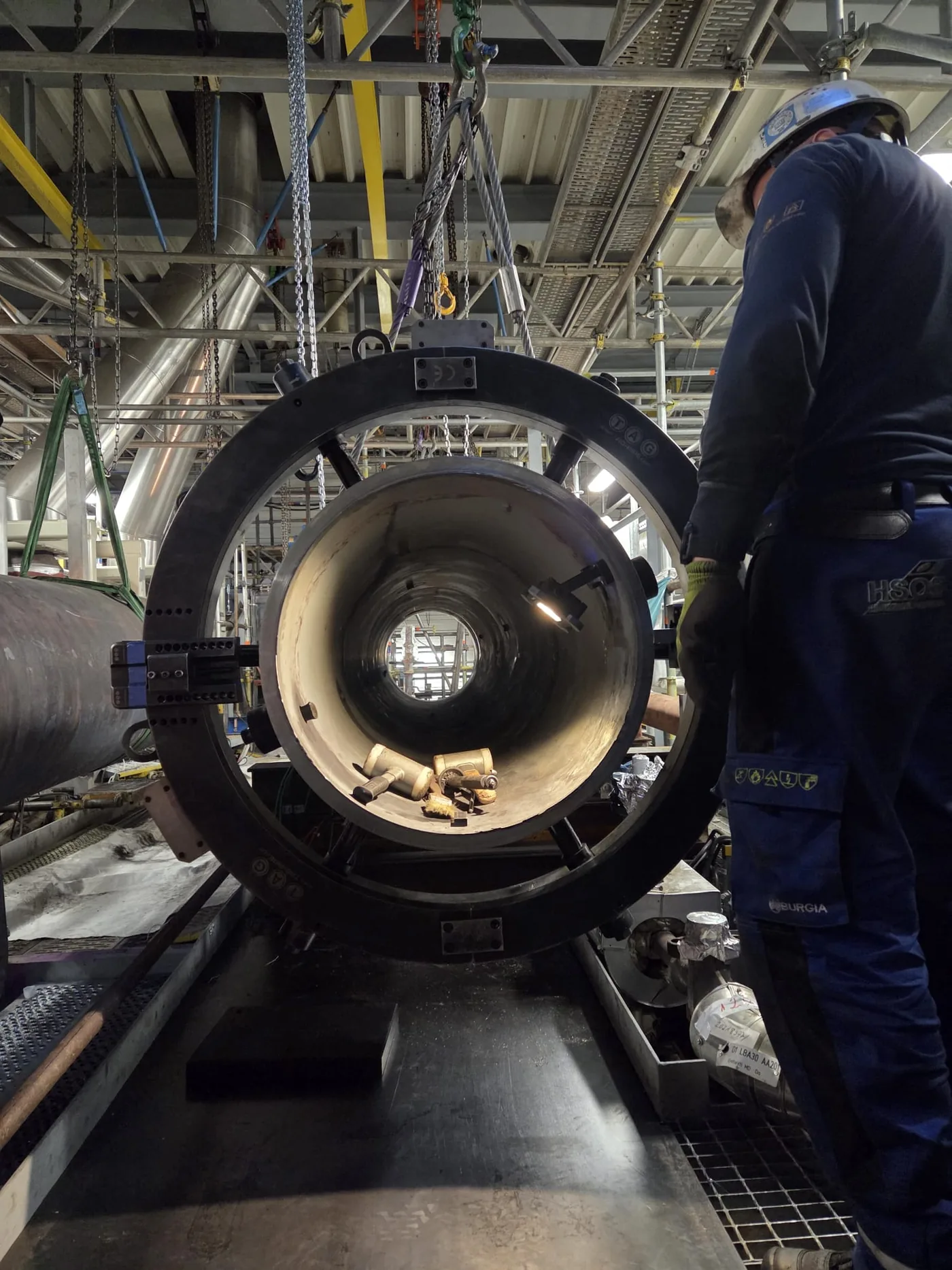
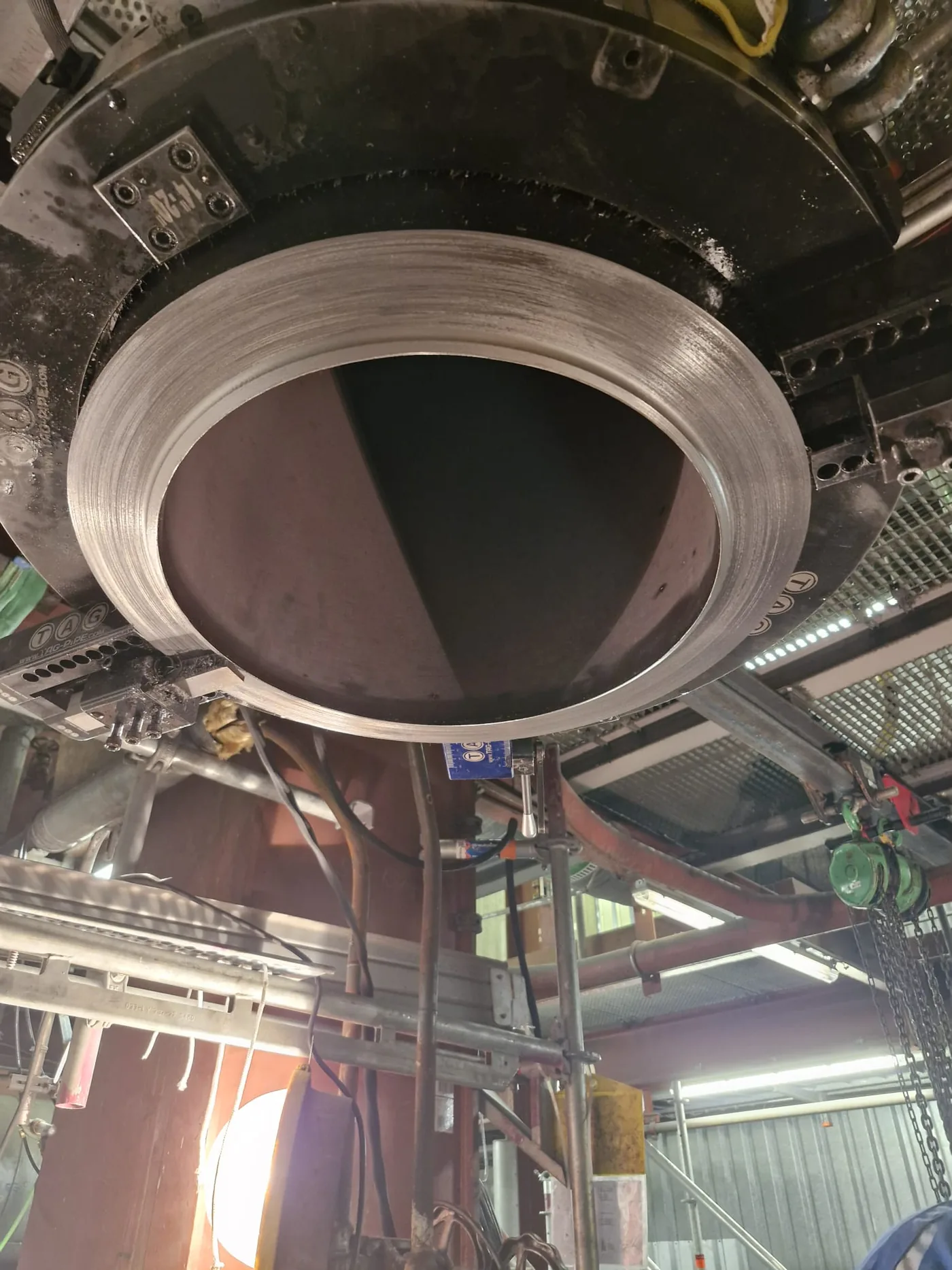
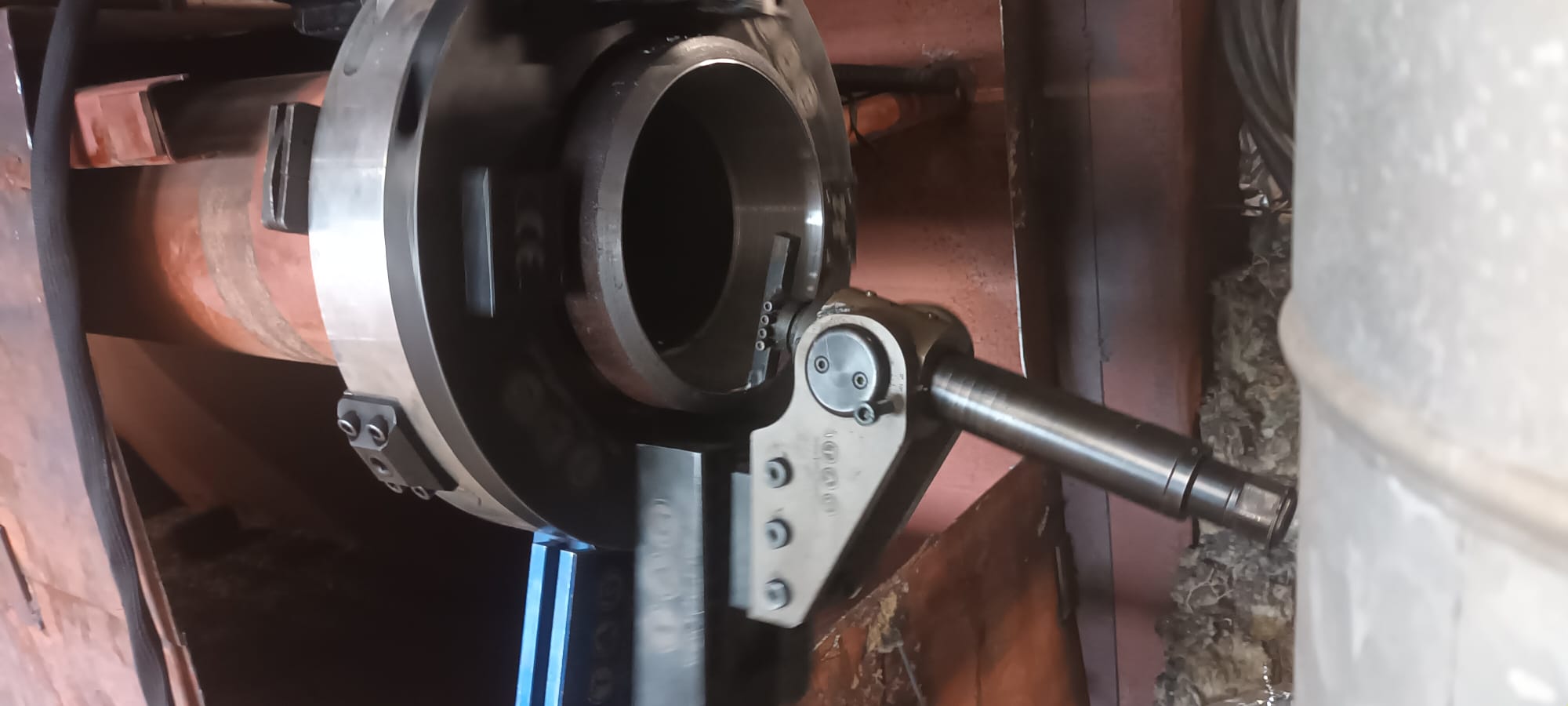
Overview of common bevel geometries by code (EN ISO 9692-1 / ASME) – incl. unequal wall thickness (bore transitions) and beveling of branch openings (nozzles/probes).
Open the bevel overview →Frequently Asked Questions
Why cold cutting instead of flame cutting or an angle grinder?
Cold cutting does not change the material structure (no heat-affected zone), produces no flying sparks and delivers a dimensionally accurate, immediately weldable bevel. In Ex areas and on lines that have carried product it is often the only permissible method.
Which pipe diameters can you cut?
With our split-type pipe cutters we cut pipes from 1″ to 110″ (approx. 25–2,800 mm). The Trav-L-Cutter runs on a chain that can be extended almost indefinitely and wrapped around round components or set up straight/longitudinally — so even very large workpieces can be cut and straight cuts performed.
What utilities are required to operate the machines?
Servo-electric pipe cutters need one power connection up to DN300 (12″) and two separately fused connections above DN300, each 230 V / 16 A, and are the drive of choice in most cases. Pneumatically driven pipe cutters need compressed air at 4–5 m³/min and a constant 4–6 bar (or more) for optimal performance. Hydraulic power units require 380–400 V at 32–63 A.
Can you work in Ex areas?
Yes — the machines run pneumatically or hydraulically and, as a cold process, create no ignition source. Work is carried out on the basis of our documented risk assessment and VCA petrochemical certification.
How can I best support the workflow?
Already at the quotation stage we ask for the necessary parameters such as accessibility, line data and bevel geometries. To make the on-site process as efficient as possible, you can:
- mark the cut positions on the pipe
- prepare the necessary work permits
- ensure that components to be cut out are supported
- provide the lifting equipment for loading and unloading
- supply the necessary utilities at the work location
- ensure the pipework is as free as possible from tensile or compressive forces