
What is on-site flange facing?
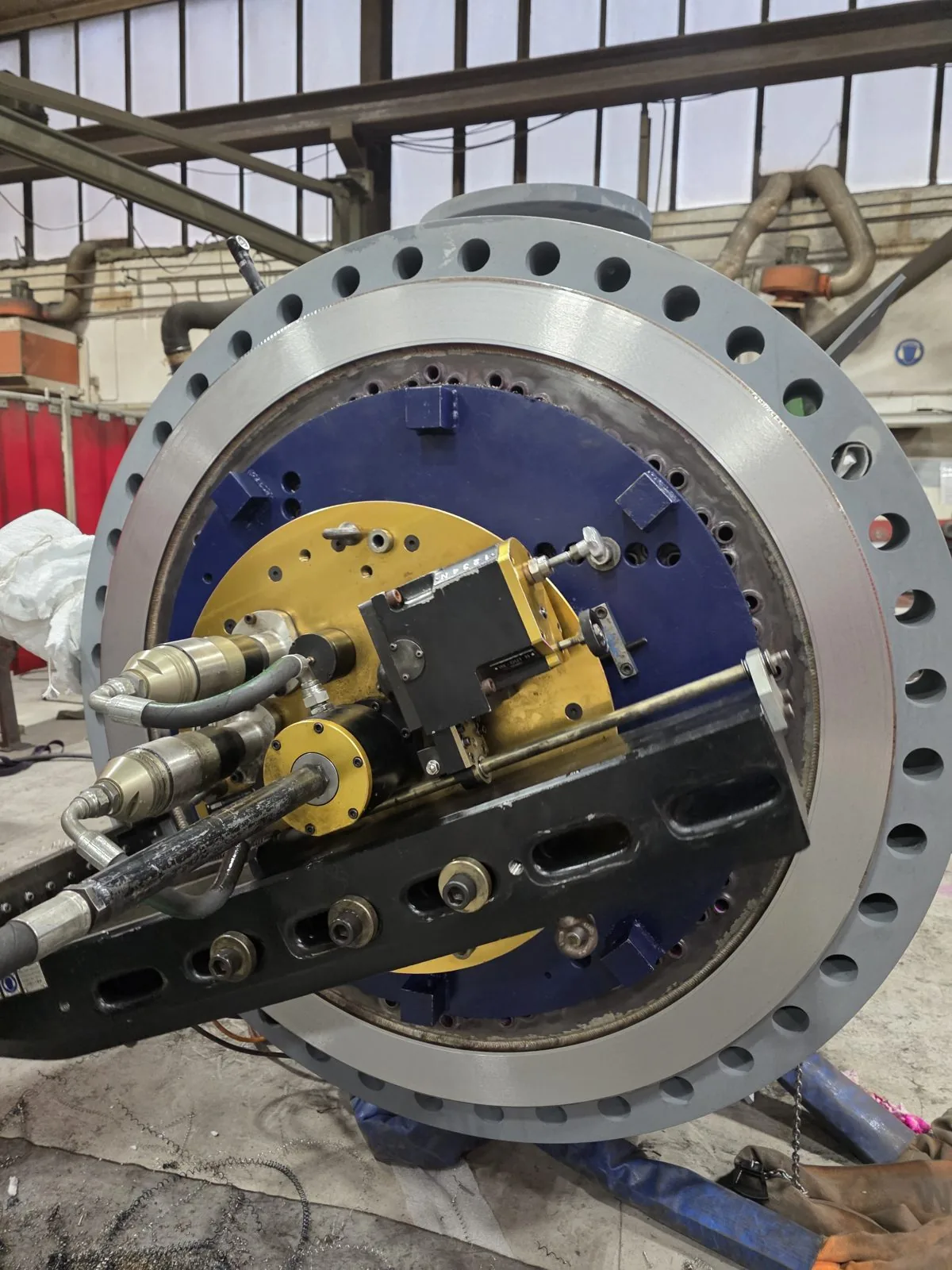
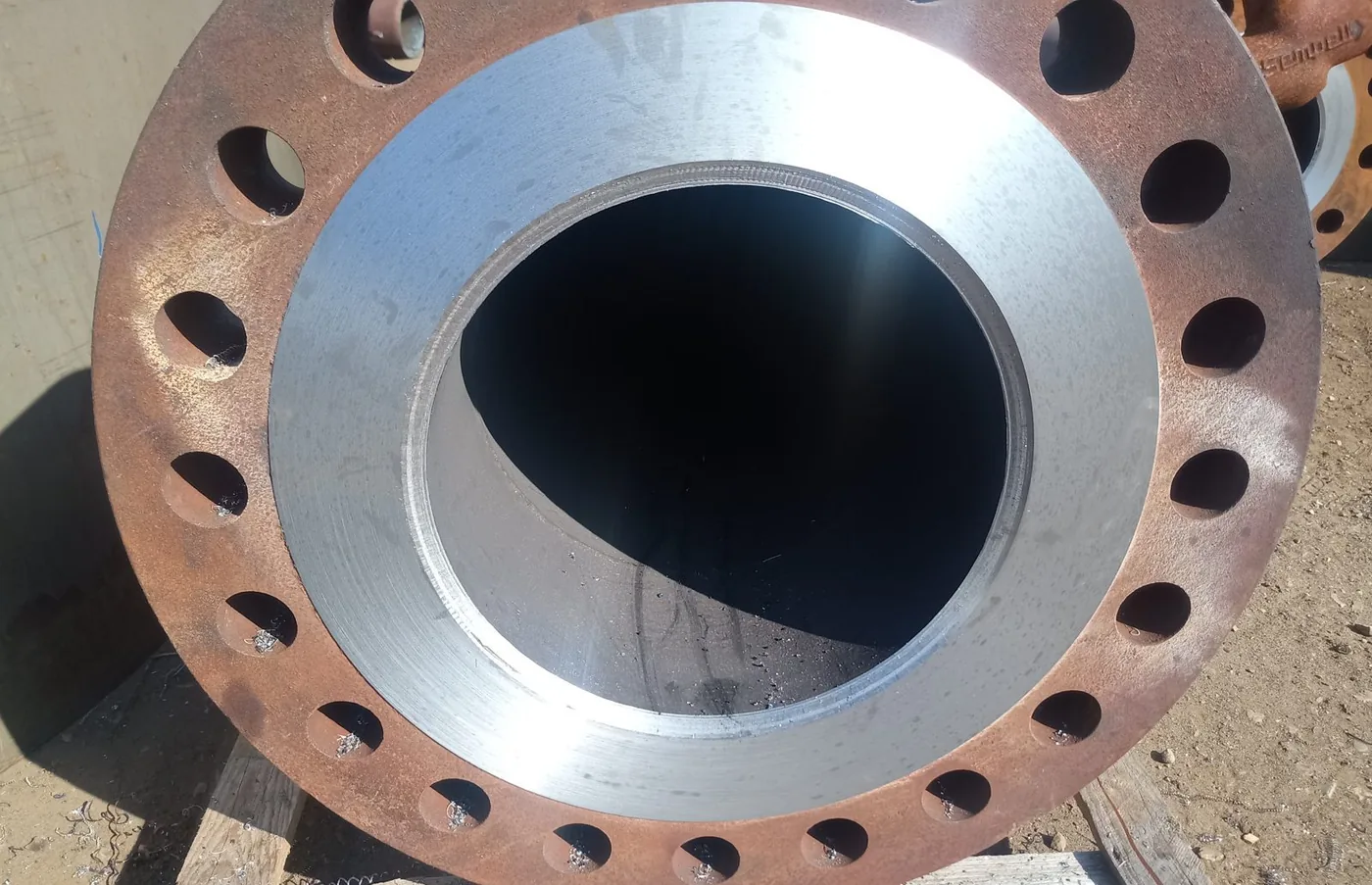
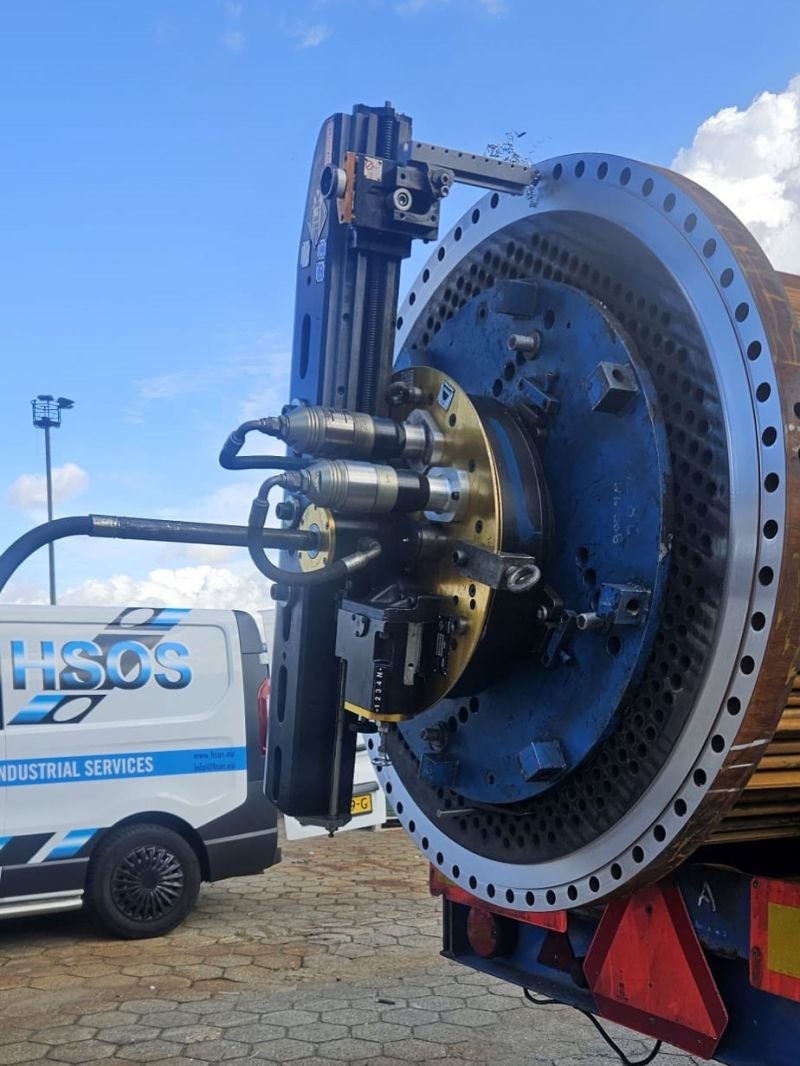
In on-site flange facing, a portable flange facing machine is mounted directly on the flange — clamped internally (ID) or externally (OD) when the bore is not accessible. Corroded, scored or warped gasket faces are re-machined in place until they meet the flatness and surface finish required by the standard. Cutting the pipe or removing valves is avoided entirely.
Flange facing is a conventional turning operation. On request, and depending on the conditions, surfaces can also be milled — conventionally or CNC-guided; see “On-site CNC machining”.
Scope of service
- ▸Re-facing damaged gasket faces (corrosion, pitting, scoring, scratches)
- ▸Angular machining of warped or misaligned flanges
- ▸Re-cutting seal grooves, e.g. RTJ (ring type joint), tongue/groove, lens gasket faces
- ▸Spot-facing of bolt circles (seating faces for bolt heads/nuts)
- ▸Producing defined finishes (smooth or serrated) to specification
- ▸Turning from approx. 25 mm (1″) up to 12,000 mm; OD-mounted where access is restricted
- ▸Pneumatic, hydraulic and electric drives — also suitable for hazardous (Ex) areas
Technical data
| Parameter | Value |
|---|---|
| Diameter range (turning) | approx. 25 mm (1″) – 12,000 mm |
| Diameter range (OD-mounted) | where bore access is restricted — smallest diameters with OD-clamped machines |
| Surface finish | typically Ra 1.6–3.2 µm when turning; coarser on request up to approx. Ra 12.5 µm (serrated finish to ASME B16.5 or per facing form to EN 1092-1) |
| Flatness | within a few hundredths of a millimetre, depending on diameter |
| Typical machining time | DN300 (scratches/light damage): set-up, alignment and facing approx. 3–4 h; large DN2000 flange (approx. 80″): approx. 8–10 h — machining only, excluding travel/delays |
| Machine fleet (extract) | flange facers AX0/12 to AX48/120 (incl. AX3/21, AX14/45, AX28/72), gantry TFM 3500, TGM250, MSF 1200/1600 |
Standards & qualification
Gasket faces are machined to the surface finishes required by ASME B16.5 or EN 1092-1; for permissible flatness, the guidance of ASME PCC-1 (Appendix D) applies. The company is certified to ISO 9001:2015, ISO 45001:2018 and VCA-P 2017/6.0.
Typical applications
- ▸Turnaround: gasket faces of heat exchanger and column flanges are re-faced during the shutdown — directly combined with our bolting team (controlled re-tightening).
- ▸Leak after start-up: a warped gasket face is machined flat in place instead of replacing the component.
- ▸Corroded RTJ groove: the groove is re-cut with the flange still installed.
- ▸Reference, chemical park: head and shell of a heat exchanger machined — approx. 4 days on site.
Why HSOS?
Avoids cutting pipe and removing valves — huge time and cost savings during shutdowns. Available Europe-wide, 24/7, with documented results (measurement report on request). During turnarounds, flange facing, bolting and heat treatment come from a single source.
Which roughness suits which gasket, when the serrated („record") finish is required – and which damage forces re-machining, with an on-site recognition guide.
Open the sealing-face overview →Frequently Asked Questions
Which flange sizes and types can you machine on site?
With ID- and OD-mounted machines we face gasket surfaces from approx. 25 mm (1″) to 12,000 mm — from small valves to large column and heat-exchanger flanges, including RTJ grooves, lens gasket faces and special forms.
Which surface finish do you achieve?
The surface is produced to your specification — typically Ra 1.6–3.2 µm when turning, coarser on request up to approx. Ra 12.5 µm, smooth or serrated to ASME B16.5 or the facing forms of EN 1092-1. The result is measured and documented on request.
How long does flange facing take?
Guide values for set-up, alignment and facing of lightly damaged faces: DN100 approx. 2 hours, DN300 approx. 3–4 hours, large DN2000 flange (approx. 80″) approx. 8–10 hours — machining time on site only, excluding travel and unforeseen delays.
Does the plant have to be taken out of service?
Only the affected joint has to be opened, depressurised and released for work — dismantling the pipework or valve is not necessary. That is exactly where the time saving over a workshop repair comes from.