What is line boring?
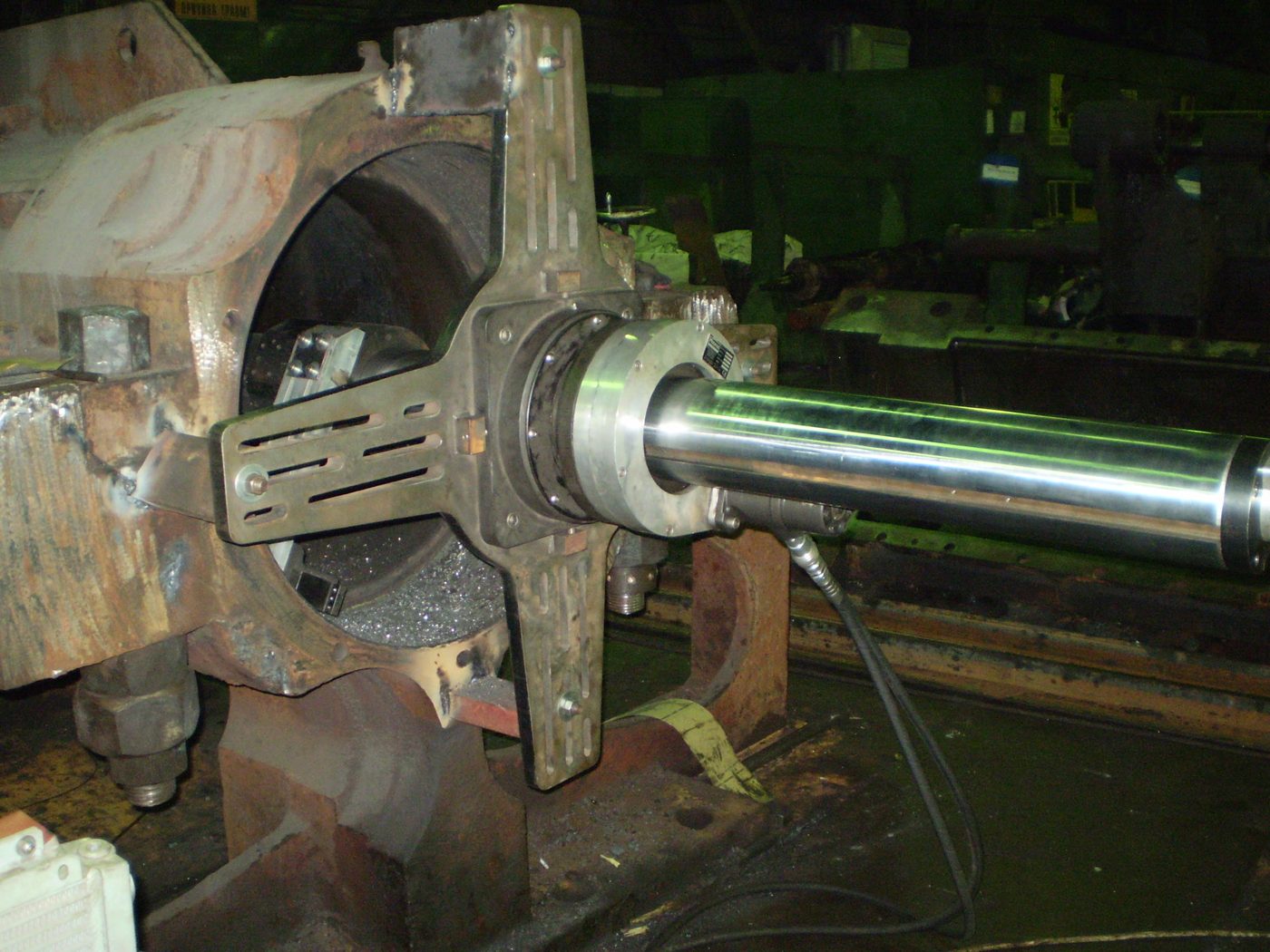
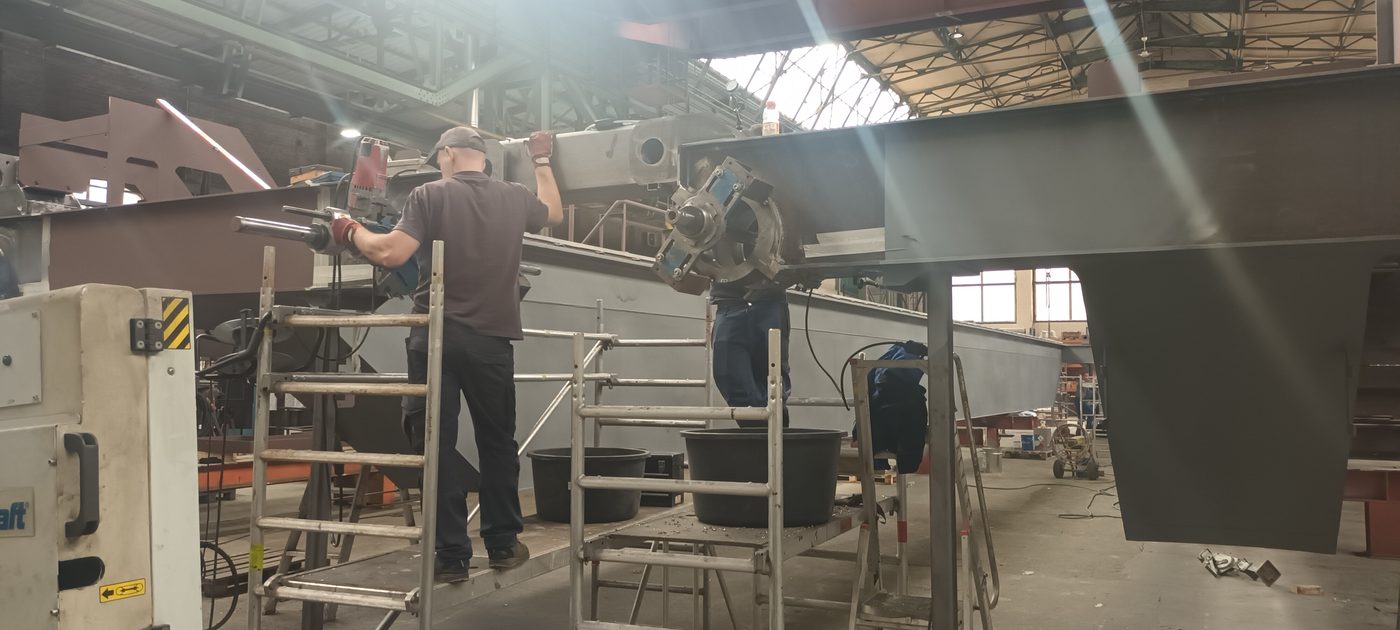
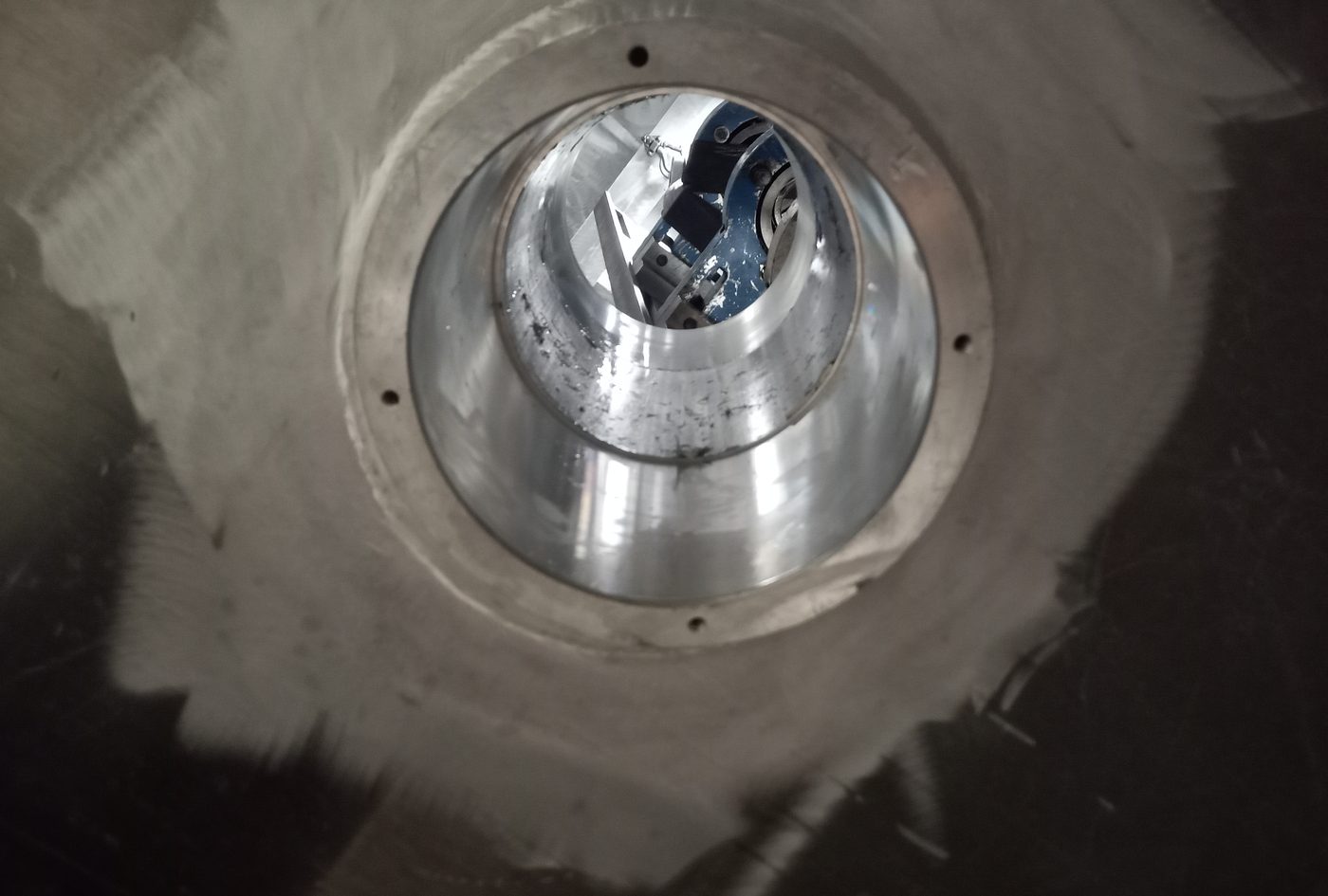
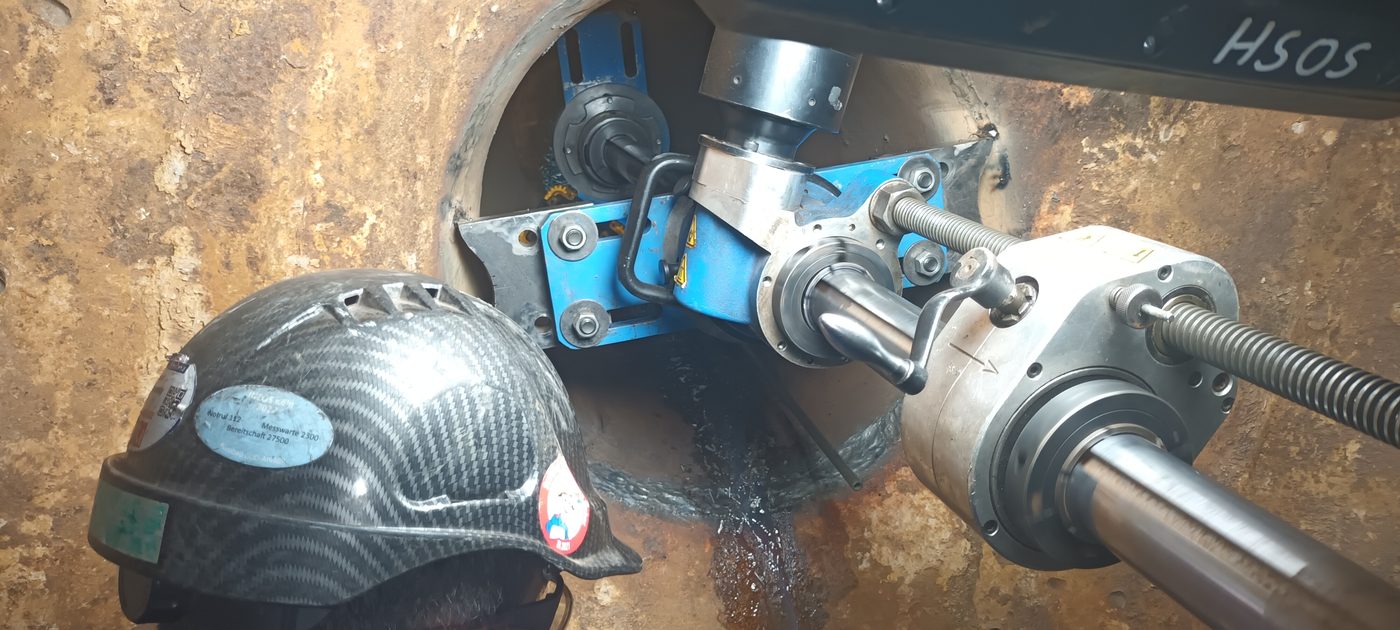
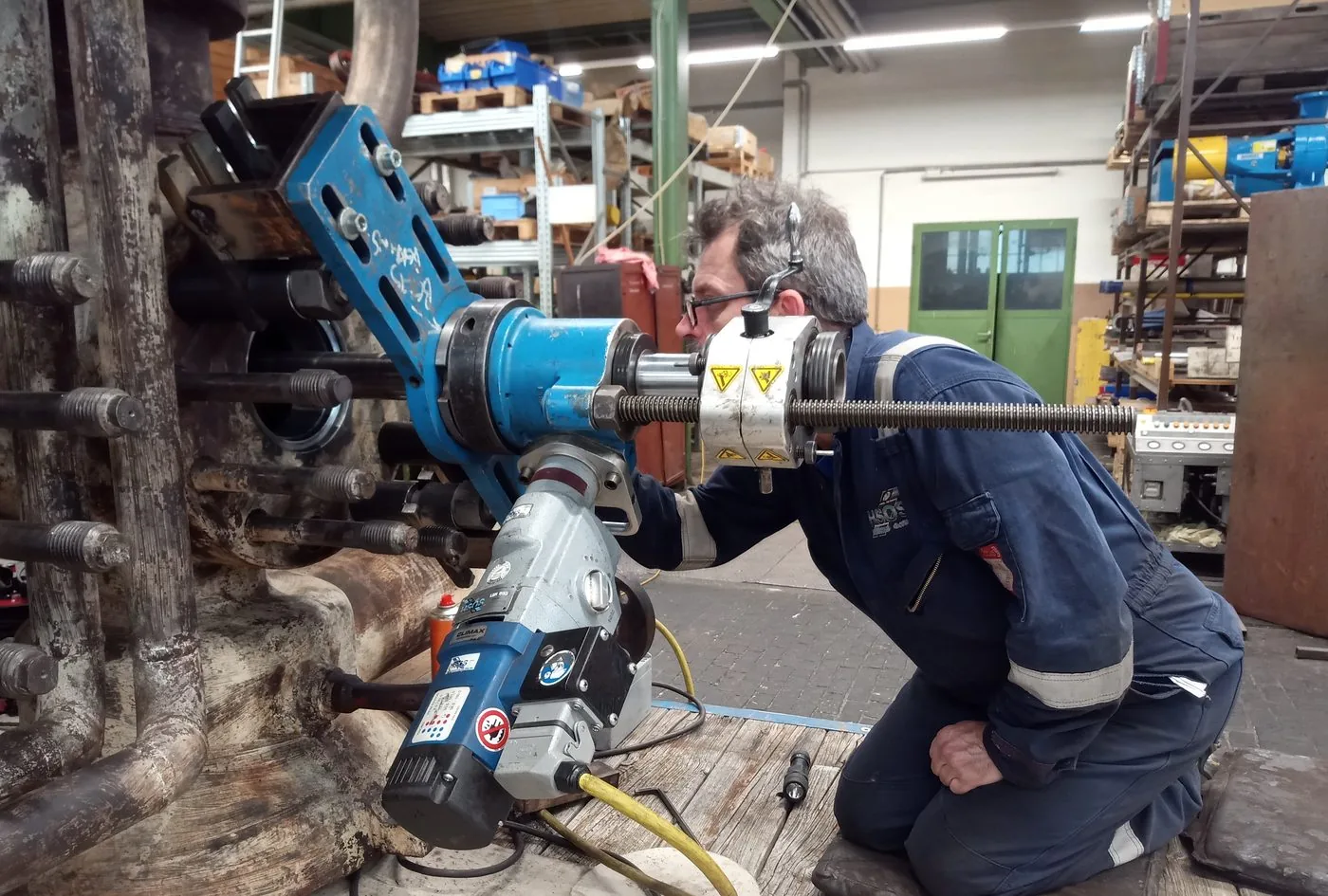
Line boring is the mobile machining of cylindrical bores in place: a boring bar is aligned in the bearing line or bore and machines worn or damaged bearing seats, pin bores and shaft seats back to original size — in true alignment across several bearing positions. If too much material is worn away, the bore is first built up by welding and then re-bored to the target dimension.
Alternatively — where it makes sense — we bore to an oversize and fit a bushing (press fit, shrink fit or align-boring). This restores the component's original geometry without having to replace the entire large part.
Scope of service
- ▸Re-boring worn bearing and pin bores to original size
- ▸Build-up welding (weld deposition with the welding attachments of the line-boring machines) and re-machining in case of heavy wear
- ▸Aligned machining of several bearing positions in one set-up (bearing lines)
- ▸Boring to oversize and fitting of bushings (press fit, shrink fit, align-boring)
- ▸Seating faces, grooves and tapered bores; deep-hole drilling with the line-boring machine
- ▸Typical components: overhead- and harbour-crane bearings, pin bearings, engine-block main bearings, gearbox housings, frames of heavy and construction machinery, hydraulic cylinder housings, stern tubes
Technical data
| Parameter | Value |
|---|---|
| Bore diameter | approx. Ø 34 – 2,200 mm |
| Machining length / bearing line | standard boring bar up to 4,000 mm; modularly extendable via coupled bars (higher set-up effort) — applies to all machine models |
| Achievable tolerance | 0.02 – 0.05 mm, depending on component, material and conditions |
| Boring-bar alignment | dial gauge, laser measurement or angle-measuring instrument (theodolite) |
| Build-up welding | weld deposition with the welding attachments of the line-boring machines; where welding procedure qualification/welder certification is required, together with qualified welding companies |
| Drives | pneumatic, hydraulic, electric (site-standard) |
Sequence of a bearing bore repair
- ▸1. Measuring the as-found geometry (wear, alignment)
- ▸2. Build-up welding of the worn bore if required
- ▸3. Aligning the boring bar across all bearing positions (dial gauge, laser or theodolite)
- ▸4. Boring to original size, measurement report
Standards & qualification
Machining is carried out to the customer's specification or drawing; the results are measured and documented. The company is certified to ISO 9001:2015, ISO 45001:2018 and VCA-P 2017/6.0. We carry out the build-up welding ourselves using the welding attachments of our line-boring machines; where welding procedure qualifications or welder certificates are required, we work together with qualified welding companies.
Typical applications
- ▸Harbour crane: simultaneous re-boring of six pin bearings — in true alignment in a single set-up.
- ▸Steel mill: re-boring a pin bearing including cutting grooves and machining seating faces for the anti-rotation lock.
- ▸Shipbuilding: multi-step re-boring of the fits of stern tubes.
- ▸Steel mill: deep-hole drilling with the line-boring machine — e.g. Ø 70 mm, 800 mm deep into solid material in a torpedo ladle; bores up to 1,200 mm deep.
Why HSOS?
Repair in place prevents vibration and uneven wear, significantly extends bearing life — and is the cost-effective alternative to replacing expensive large components. The laborious removal and refitting of heavy components as well as heavy-haulage transport to external machining centres are eliminated. Europe-wide, 24/7, combinable with our on-site CNC machining.
Frequently Asked Questions
Which bore diameters can you line-bore on site?
Our mobile boring units cover bores from approx. Ø 34 mm up to 2,200 mm. We machine bearing lines with a standard boring bar up to 4,000 mm long — modularly extendable via coupled bars — in true alignment across several bearing positions in a single set-up.
What happens if the bore is too badly worn?
Then the bore is first built up by welding and subsequently line-bored back to the original dimension. Alternatively — where possible — we bore to an oversize and fit a bushing (press fit, shrink fit or align-boring). The component regains its original geometry — replacement is not necessary.
Which accuracy is achievable in line boring?
We work within a tolerance range of 0.02–0.05 mm — depending on component, material and conditions. The result is measured and documented.
Do you carry out the build-up welding yourselves?
Yes. We carry out the weld deposition ourselves using the welding attachments of our line-boring machines. Where welding procedure qualifications or welder certificates are required, we work together with qualified welding companies.