
What is on-site heat treatment?
On-site heat treatment means: welds and components are heated, held and cooled in a controlled manner directly on the construction site or in the plant — from preheating before welding, through post weld heat treatment (PWHT/stress relieving), to dry-out of refractory concrete and curing of tank coatings. The purpose of PWHT is to reduce residual stresses, lower the hardness in the heat-affected zone and protect against hydrogen-induced cracking — a precondition for the acceptance of pressure-retaining components to code.
Methods and equipment
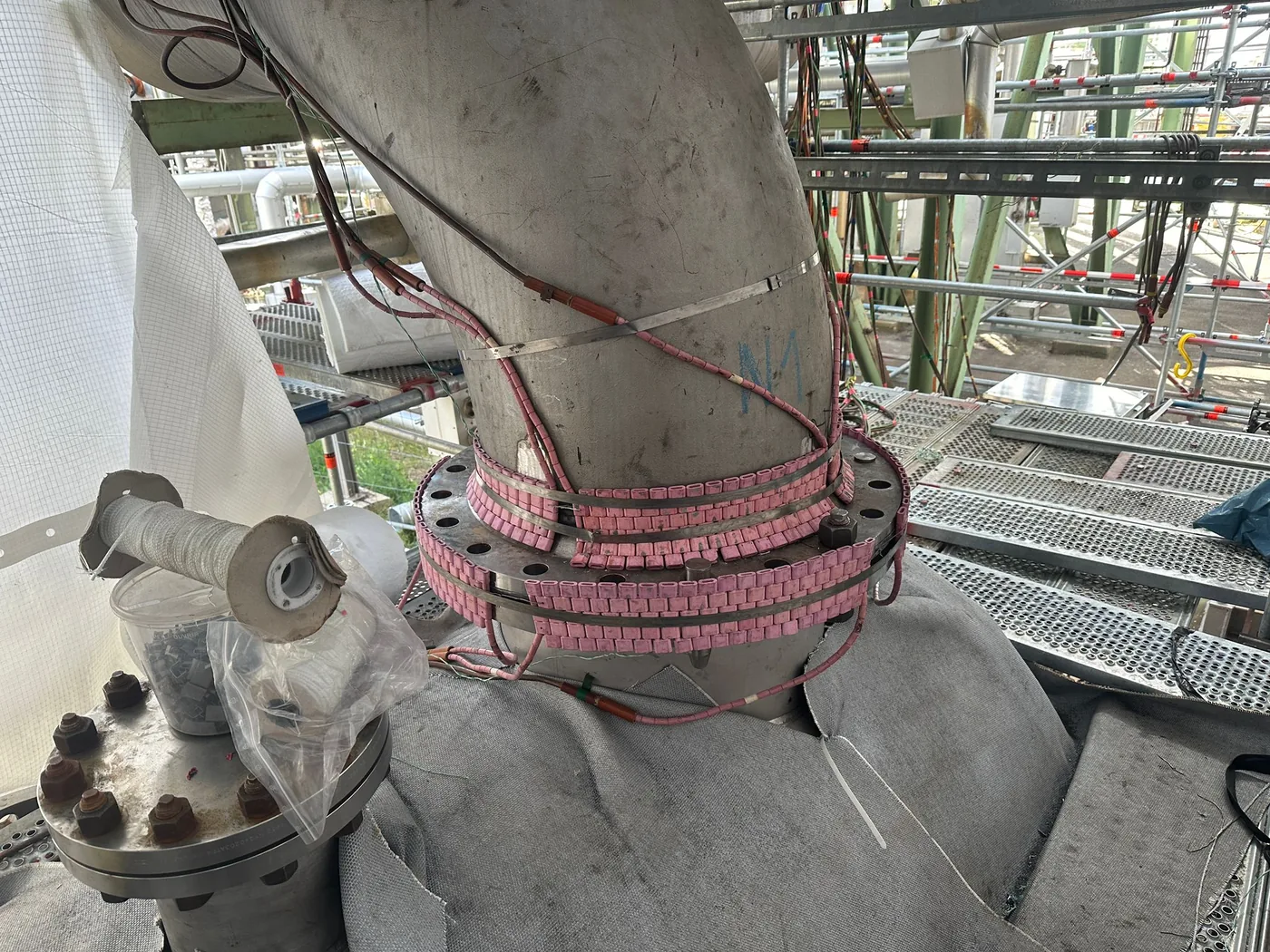
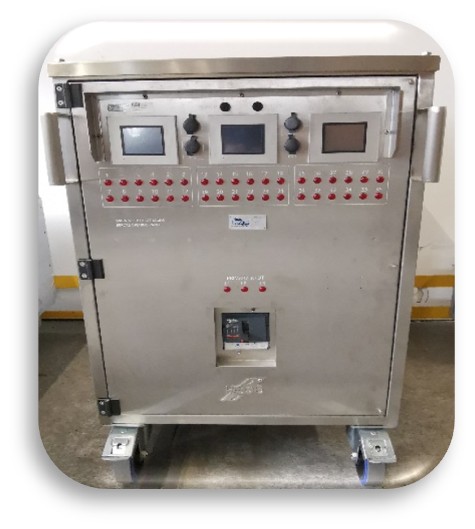
- ▸Electrical resistance heating: flexible ceramic heating mats, programme-controlled units with 1 to 36 channels — from a single pipe joint to large projects. Element temperatures up to 1,200 °C.
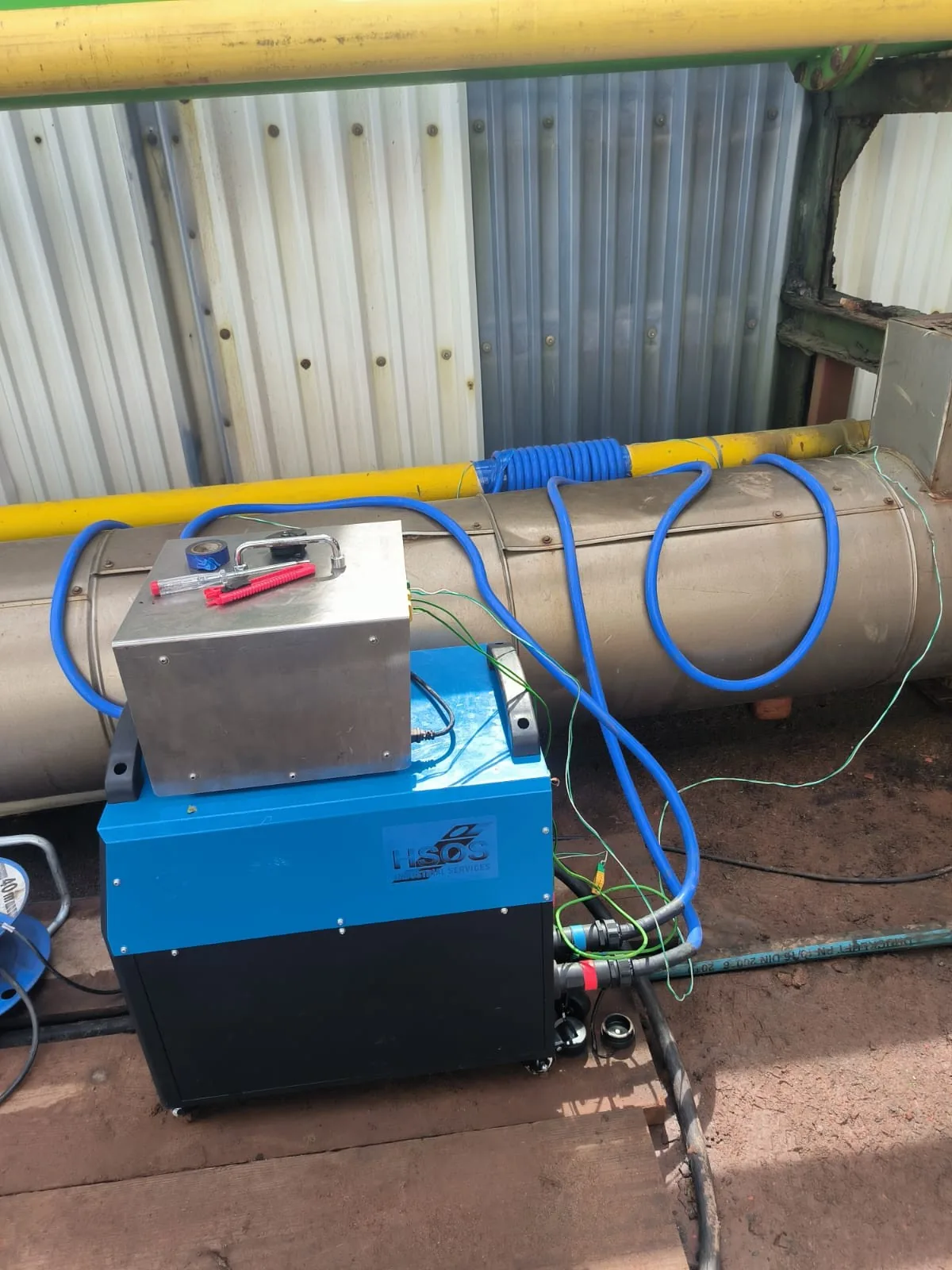
- ▸Induction heating: heat is generated directly in the component — fast, energy-efficient, precisely controllable, especially for heavy wall thicknesses. For preheating work optionally with water-cooled inductors (less heat radiated towards the welder); air-cooled systems are particularly easy to install.
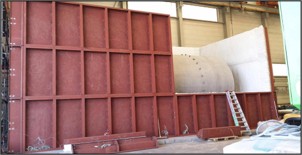
- ▸Mobile furnaces: gas/oil-fired, also under shielding gas, up to 1,100 °C — for components that must be heated through completely and cannot be transported.
- ▸Normalising and special anneals above PWHT temperatures: usually by resistance heating, also possible with burners.
- ▸Unit ratings: 10 to 300 kVA
- ▸Also available for rental — including 36-channel units for large projects.
Treatment types and temperature ranges
| Treatment | Typical range | Purpose |
|---|---|---|
| Preheating / interpass | material-dependent, often approx. 100–250 °C | preheating before welding |
| Hydrogen bake-out (soaking) | approx. 200–300 °C, several hours | removal of diffusible hydrogen |
| Stress relieving / PWHT (carbon steels) | approx. 550–620 °C, holding time ≈ 1 h per 25 mm wall | stress reduction, hardness reduction in the HAZ |
| PWHT of creep-resistant CrMo steels | higher temperatures, up to approx. 760 °C (e.g. P91) | as above, material-specific |
| Normalising / special anneals | per material data sheet, up to 1,100 °C | microstructure adjustment |
| Dry-out of refractory concrete | per calculated drying curve | controlled removal of water without cracking |
| Curing of tank coatings | approx. 80–90 °C | coating reaches target hardness on schedule |
| Curing of composite repairs and coatings | per epoxy resin manufacturer's specification, sometimes multi-stage heat curve | improved product properties, quality assurance through documented curing |
The governing document is always the project welding/material specification (WPS, material data sheet, code) — the ranges above are guide values. Heating and cooling rates are run and recorded to specification.
Standards & approval — TÜV-certified to AD 2000 HP 7/1
HSOS is certified by TÜV NORD to AD 2000 leaflet HP 7/1 (certificate 07/203/1404/HP/5016/23) for heat treatment of pressure vessels and piping in accordance with AD 2000 leaflets HP 7/2 (ferritic steels), HP 7/3 (austenitic steels) and DIN EN ISO 17663. In addition we work to DIN EN ISO 13916 (temperature measurement) and the PWHT requirements of EN 13445, ASME VIII and ASME B31.3 — depending on the code your plant is built and inspected to.
Documentation — complete and auditable
Thermocouples attached directly at the weld, programme-controlled units and calibrated multi-channel temperature recorders log the complete temperature-time curve — heating rate, holding time, cooling rate. The number of thermocouples is determined by the WPS; without a specification we set number and position to code. Recording is digital or on paper as the customer prefers (we recommend digital for environmental reasons); on request, the recorder data is streamed live to a server that you get access to for your project (verification). You receive the heat treatment record as auditable evidence for TÜV, notified body or customer QA, handed over to project specification.
Difference between preheating and PWHT
Preheating happens before and during welding: it slows cooling, lets hydrogen escape and prevents hardening and cold cracks — especially with thick-walled and higher-strength steels. PWHT/stress relieving follows after welding at a much higher temperature (below Ac1): it reduces the residual stresses created by welding and establishes the required mechanical properties of the joint. Whether and how both are required follows from material, wall thickness and code — we advise on the basis of your WPS.
Typical applications
- ▸Turnaround/new piping construction: daily PWHT runs for the prefab and field welds of several contractors — with multi-channel units in parallel, recorded per weld.
- ▸Power plant/petrochemical: PWHT on creep-resistant CrMo headers and high-pressure lines to ASME B31.3 or EN 13445.
- ▸Tank farm: curing the internal coating of a tank at 80–90 °C — significantly shortens the waiting time until refilling.
- ▸References: heat treatment of countless welds for all major petrochemical operators and in prefabrication for large projects; heat treatment of vessels up to 15 m length in the mobile furnace.
Frequently Asked Questions
What is the difference between PWHT and preheating?
Preheating happens before/during welding and prevents cold cracking; PWHT (stress relieving) follows after welding at a higher temperature and reduces residual stresses. They are separate steps with their own temperature windows and their own documentation.
Which standard applies to heat treatment (e.g. AD 2000 HP 7/1)?
Internationally, the PWHT requirements of ASME VIII or ASME B31.3 apply, in Europe EN 13445. For pressure equipment under the AD 2000 code, leaflets HP 7/1 (general principles — HSOS is TÜV-certified to it), HP 7/2 (ferritic steels) and HP 7/3 (austenitic steels) apply; for execution quality DIN EN ISO 17663 and for temperature measurement DIN EN ISO 13916. Which code applies is determined by the design/inspection basis of your plant.
How is the temperature profile documented?
Via thermocouples attached at the weld and calibrated multi-channel temperature recorders; alternatively, thermocouples can be attached with coupling paste — e.g. on refractory linings. The complete temperature-time curve (heating, holding, cooling) is recorded and handed over as an auditable heat treatment record — per weld, to your specification.